Most visitors meet Lake Yelcho the same way: a bend in the Carretera Austral, and suddenly there is a long sheet of water the colour of glass, with snow on the mountains behind it and forest down to the shore. It is easy to treat it as scenery. It is more useful to think of it as a living system, and a remarkably delicate one. This article is about why.
Lake Yelcho is large by any standard. It covers about 116 km², stretches some 29 km from end to end and is up to 6 km wide. It sits only about 60 m above sea level, yet it is deep: an average of around 135 m and a maximum of about 238 m, holding something like 15.7 km³ of water.
What makes it ecologically special, though, is not its size but how little is dissolved in that water. Lakes are classified by how many nutrients they carry, above all phosphorus and nitrogen. The lakes of Chilean Patagonia sit at the far end of that scale. The Instituto de Fomento Pesquero (IFOP), which monitors the lakes of southern Chile for the government, describes this group as among the most oligotrophic (nutrient-poor) lakes in the world, with median phosphorus concentrations of around 5 micrograms per litre.
You can see the result from the jetty. Low nutrients mean little algae, and little algae means clear water. When glacial flour from melting ice is not clouding it, you can follow the stones on the bottom far further out than you would expect.
Lake Yelcho does not end at its shores. Its main inflow is the Futaleufú River, which rises on the Argentine side of the Andes, crosses the border and enters the lake at its southern end. At the other end the water leaves as the Yelcho River, which runs north-west to the Gulf of Corcovado near Chaitén, carrying an average of around 360 m³ of water per second to the Pacific.
The catchment that feeds the lake covers roughly 11,000 km² across both countries. IFOP notes that Yelcho is the only lake in its monitoring network whose basin is shared with Argentina. In practice this means that the water in front of the hotel has already passed through forests, valleys and towns on the other side of the mountains. Its health depends on decisions made far beyond this shore.
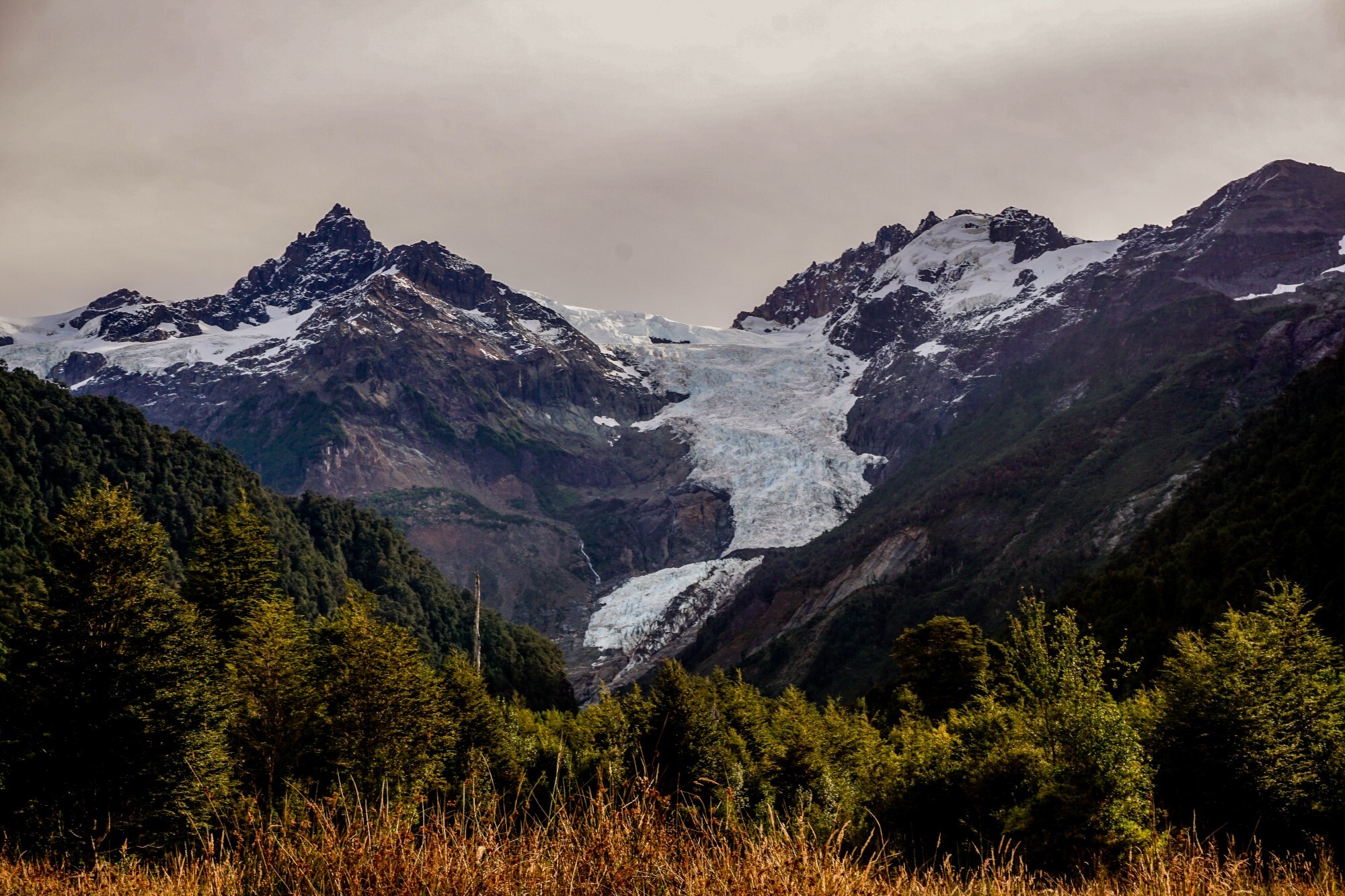
The Yelcho Glacier hanging above the valley, one of the ice masses that feed the basin
It sounds paradoxical, but a lake this pure is easier to damage than a murky one. In a system where nutrients are scarce, even a small extra supply of phosphorus can change what grows. More nutrients feed more algae, the water loses clarity, and over time the balance of the whole food web shifts. Scientists call this process eutrophication, and once it is under way it is slow and expensive to reverse.
Lake Yelcho also tends to keep what it receives. IFOP's nutrient balance estimates that about 91% of the phosphorus reaching the lake ends up settling into its sediments rather than flowing out. That is part of how the lake stays clear, but it also means that the lake has a long memory. What goes in today will be there for decades.
The sources of extra nutrients are well known: fish farming, agriculture, and the runoff and wastewater that come with roads, houses and new subdivisions. Across the lakes it monitors in the region, IFOP found that diffuse sources, mainly land use, account for roughly three quarters of the phosphorus load, and it flags lakeside subdivisions for housing as a growing concern in Patagonian basins.
There is some good news. Salmon farming was once carried out in Lake Yelcho, and IFOP's most recent report records that production in the lake has ended. Its general recommendation for Patagonian lakes is clear: do not increase aquaculture, and reduce it gradually where it still exists.
If nutrients mostly arrive from the land, then the land beside the water is where the lake is protected or lost. A shoreline under native forest works as a buffer. Roots hold the soil when the rain comes, which here is often (between 3,500 and 5,000 mm a year). Leaf litter and wetlands slow runoff and trap sediment before it reaches the lake. Shaded margins and fallen wood create habitat for insects, amphibians and young fish.
That is why the shore of Fundo Rucapangue, the farm on which the hotel stands, matters so much to us. The property has around 5.8 km of lakeshore and about 84% of its 750 hectares is native forest. Keeping that edge wooded, unbuilt and unfragmented is one of the most direct contributions we can make to the lake's water quality. The same logic, applied at a larger scale, is why we care about the land that borders Corcovado National Park, which we wrote about in Ten Kilometres of Shared Border.
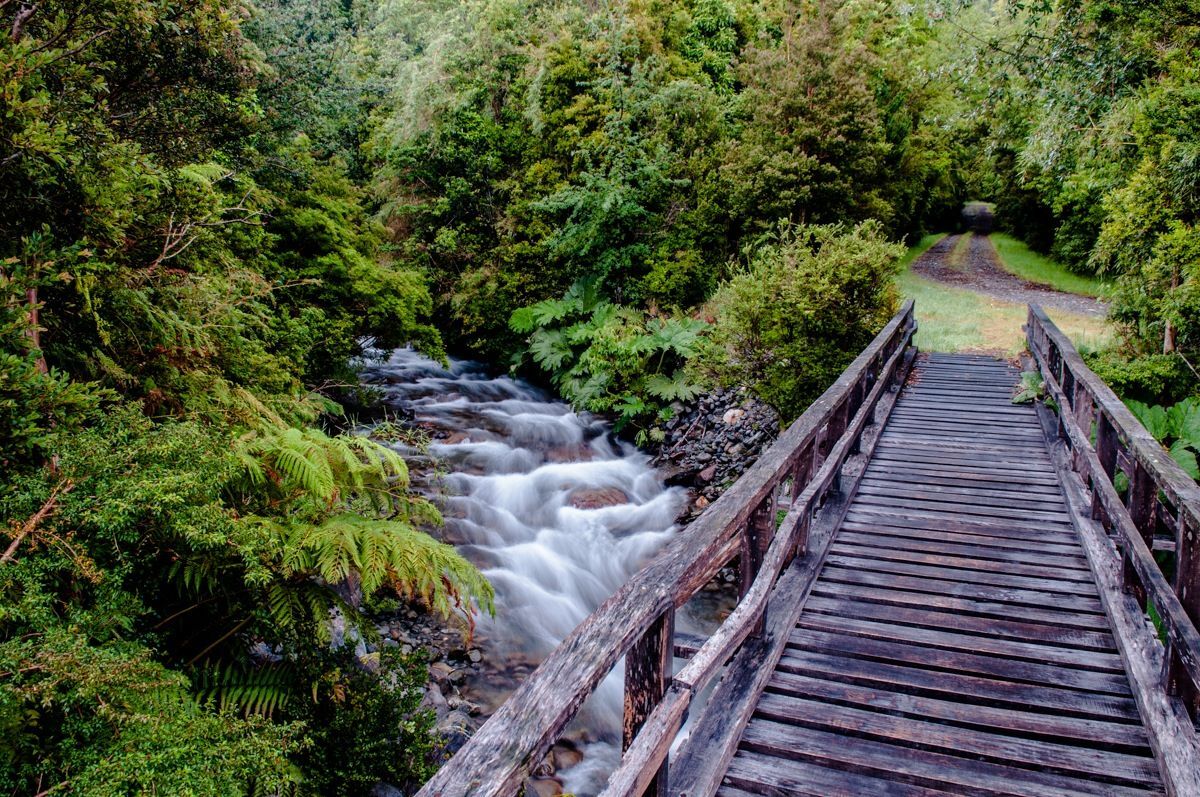
Native forest and a stream running down towards the lake at Rucapangue
Not every risk is a nutrient. Didymo (Didymosphenia geminata), an invasive freshwater alga sometimes called "rock snot", forms thick mats on riverbeds and smothers the small invertebrates that fish feed on. It has been detected in the Futaleufú and Yelcho river systems, and the Chilean authorities include the Yelcho basin in the area officially declared affected by the pest. Didymo travels on wet boots, waders, boats and fishing gear moved from one river to another, which makes every visitor part of the solution.